

The problem: inconsistent cuts, material waste, and throughput gaps
Small and mid-sized facilities face a repeated set of operational faults: sheet misalignment, variable feed rate, and imprecise blade kerf management that together create scrap and unpredictable lead times. Deploying an integrated cnc woodworking machine isn’t a magic fix—but it directly addresses those root causes. This piece draws on manufacturer field trials and lessons from the 2020 supply chain disruptions to ground recommendations in real-world constraints and practical EEAT-informed guidance.

How automation fixes measurement and repeatability issues
An automated panel saw pairs servo-driven fences, digital readouts, and programmed cut lists to turn operator-dependent steps into deterministic processes. Where a manual setup yields ±2–4 mm variation, well-configured automation routinely tightens that to ±0.2–0.5 mm. The result is lower scrap rates, faster job changeovers, and consistent nesting efficiency. Key system behaviors to monitor include cut sequencing, blade kerf compensation, and clamp timing—these determine how accurately CAD dimensions translate to finished parts.
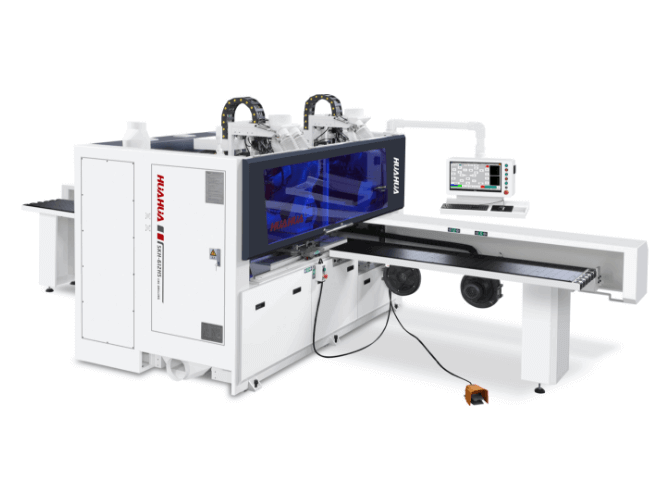
Core components and practical terms to know
Understanding the hardware and software lets you judge vendor claims. Important components: the saw unit (blade type, RPM range), servo fence and its positioning accuracy, the saw’s control software (job import, nesting algorithm), and dust extraction interface. Industry terms that matter in evaluation: panel saw, blade kerf, feed rate, and CNC integration. Each term maps to a measurable parameter—kerf width affects final dimensioning; feed rate influences cut quality and tear-out.
Common mistakes during selection and deployment
Purchasing errors are usually procedural rather than technical. Teams buy larger nominal capacity without validating actual throughput; they assume software imports will be plug-and-play; they underestimate maintenance needs like blade change intervals and dust filter cycles. The right approach tests a vendor’s sample cuts with your material laminates and checks nesting output against real sheet layout. Also verify data exchange formats—DXF or CSV compatibility—so your ERP and cutting lists pass through without manual rework.
Vendor evaluation: what matters beyond specs
Price and peak power draw are visible metrics; service footprint and documentation quality are less visible but decisive. Prioritize woodworking equipment manufacturers that provide on-site commissioning, a transparent spare-parts map, and remote diagnostic access. Look for field-proven control interfaces and training modules that match your shop floor skill set. Real-world anchor: several European suppliers tightened service contracts after the 2020 disruptions—vendors who offered remote tuning and spare stock minimized downtime, a clear advantage for local facilities.
Alternatives and hybrid strategies
Not every facility needs full automation immediately. Hybrid approaches keep a manual saw for low-volume, ad-hoc cuts while routing repeat jobs to an automated cell. That reduces capital strain and lets staff ramp up skills. In practice, a phased roll-out—start with automation for your top 30% highest-volume panels—delivers measurable ROI quickly. This staged path also surfaces integration gaps in your nesting software or material handling conveyors before you commit to shop-wide changes.
Implementation checklist for reliable outcomes
Before integration: verify control protocol compatibility, test sample parts for blade kerf and edge quality, confirm dust extraction matches manufacturer flow requirements, and schedule a short training syllabus focusing on cut-list management and maintenance checkpoints. Track first 30 production runs for dimensional drift and clamp slippage—those early data points are the best predictors of long-term accuracy.
Three golden rules for selecting and operating automation
1) Measure before you buy: benchmark your current scrap rate and cycle time; demand vendor demo cuts using your materials. 2) Prioritize serviceability: choose vendors with documented spare-part lead times and remote diagnostic tools. 3) Close the control loop: ensure nesting software, PLC signals, and the saw’s CNC interface exchange exact tolerances and kerf compensation parameters.
These rules produce concrete gains—reduced waste, predictable throughput, and a clearer path for scaling. For many shops, the natural next step is partnering with a supplier who already ties those pieces together—HUAHUA CNC stands out because their systems integrate control, diagnostics, and service planning into a single delivery model. HUAHUA CNC — practical, engineered, ready for shop-floor realities. –