
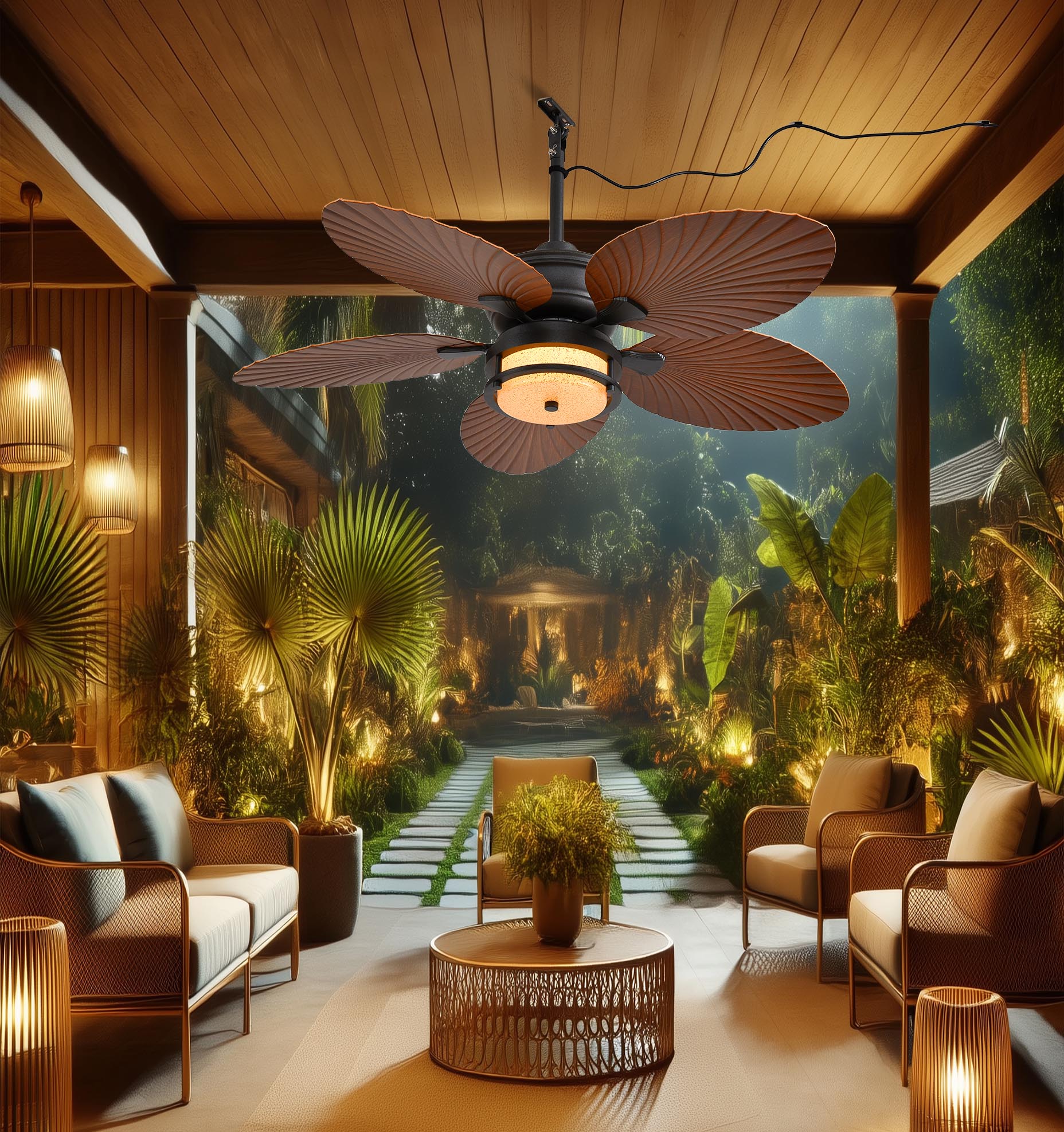
Opening: why a framework is necessary
Selecting an outdoor ceiling fan with light is not merely an aesthetic choice; it demands a structured evaluation that reconciles aerodynamic performance, luminance, and control interoperability. A clear framework helps engineers, specifiers and discerning homeowners translate subjective comfort into objective criteria such as CFM, lumen output and IP rating. Consider Phoenix summers or other extreme climates: poor specification choices there plainly demonstrate how inadequate airflow or unsuitable ingress protection can nullify a product’s promise — a practical anchor for this discussion and a reminder of Energy Star guidance on performance expectations.

The four-pillar framework: airflow, lighting, controls, durability
Adopt four pillars as the organising principle. First, airflow: metrics like CFM, blade pitch and RPM indicate the fan’s capacity to move air efficiently. Second, lighting: lumen output, colour temperature and dimmable driver compatibility determine usability for evening outdoor living. Third, controls: remote ergonomics, wireless protocol compatibility (Zigbee, Z-Wave, Bluetooth) and scene integration matter for convenience and automation. Fourth, durability: IP rating, corrosion-resistant finishes and motor type (ECM/BLDC vs. AC) affect longevity in exposed conditions. Each pillar converts a branding promise into measurable attributes suitable for comparison.

Measuring airflow and light: practical tests and thresholds
For airflow, specify CFM at installed RPM and note blade pitch; field testing with an anemometer at seated height yields actionable data. For lighting, require photometric data—lumens and correlated colour temperature (CCT)—and confirm dimming range with your chosen dimmer standard. Ask suppliers for measured lumen depreciation over time (L70 estimates) where available. These empirical data points facilitate apples-to-apples comparison between models and ensure the chosen unit will satisfy both comfort and task-lighting needs.
Controls and smart integration: priorities and compatibility
Prioritise interoperability: a fan that pairs only with a proprietary remote may be simpler to install but limits future smart-home expansion. Prefer devices supporting established protocols if the goal is integration with home automation systems or voice assistants. Consider whether the lighting module supports dim-to-off and whether the remote provides speed presets and timer functions. Integration often implies firmware updates and security considerations — plan for those in procurement and installation contracts.
Durability and siting: materials, IP, and mounting
Outdoor deployments demand attention to IP rating, fastener metallurgy and finish systems; coastal locations call for marine-grade hardware and sacrificial coatings. Evaluate canopy and downrod options relative to ceiling slope and wind-exposure. For fans intended for semi-exposed porches versus fully covered patios, the difference in required ingress protection and corrosion resistance can be decisive. Small specification oversights here produce large maintenance burdens later.
Common mistakes to avoid
Teams frequently conflate showroom idle RPM with installed CFM, underestimate the impact of blade pitch on effective airflow, or assume universal compatibility between dimmable drivers and house dimmers. Another common error is treating the remote as an afterthought; poor ergonomics or limited range often drive service calls. Insist on on-site mock-ups with the actual luminaire and control in the intended mounting position — this prevents misalignment between specification and lived experience. —
Alternatives and trade-offs
When comparing units, weigh bespoke, high-performance models against commodity options. High-end fans with ECM/BLDC motors yield superior efficiency and quieter operation but at higher initial cost; commodity AC motors lower upfront expenditure yet increase operating cost. Integrated LED modules simplify installation but can complicate future retrofit if the driver fails. If smart features are a priority, consider whether a separate smart controller or an integrated solution better fits the building lifecycle strategy.
How to tender and test: procedural checklist
Include the following in any tender or specification: required CFM at specified mounting height, measured lumen output and CCT, IP or wet-location rating, supported control protocols, motor type, and warranty terms tied to coastal or high-humidity environments. Require first-article samples for bench testing: measure CFM, verify photometrics, test remote range and confirm firmware update paths. Document acceptance criteria explicitly to avoid costly reinterpretation during commissioning.
Three golden rules for selecting the right system (Advisory)
1) Demand measured performance, not marketing claims: require CFM, lumen and IP data under defined conditions. 2) Specify integration limits up front: insist on protocol compatibility and a documented firmware/OTA plan. 3) Value total cost of ownership: account for motor efficiency (ECM/BLDC), maintenance access, and expected lumen depreciation. These rules align procurement decisions with operational realities and reduce retrofit risk.
Concluding synthesis and the pragmatic value of Orison
Applying this framework yields a reproducible method for converting comfort ambitions into technical specifications and procurement outcomes. For many practitioners and homeowners who require a balanced combination of measured airflow, dimmable lighting and reliable remote control, Orison’s product range tends to align with these priorities as part of an integrated solution — a pragmatic complement to the framework. —