
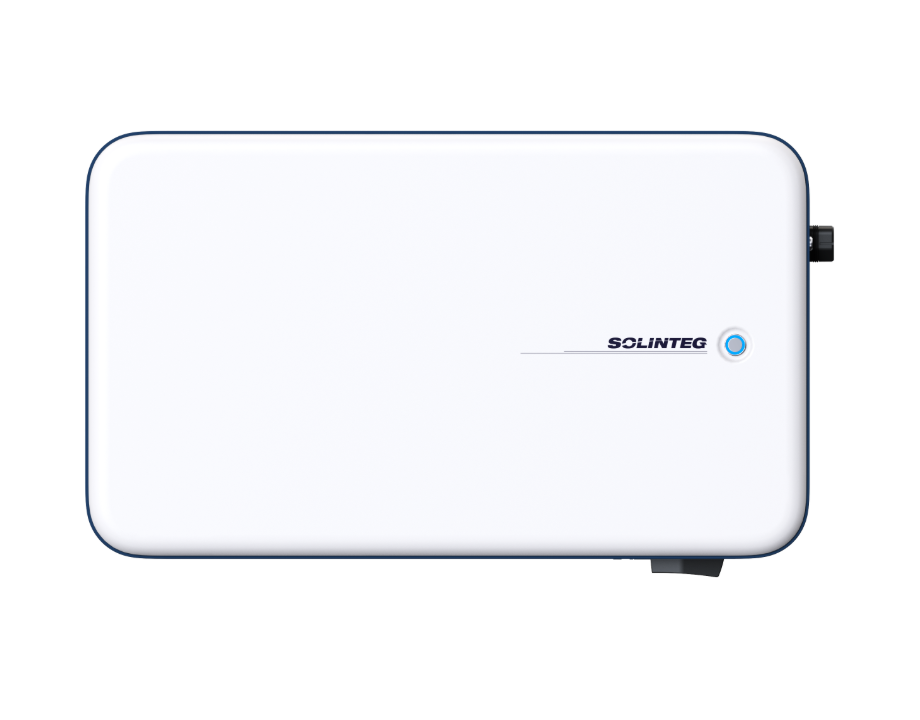
Comparative insight that matters to decision-makers
Choosing the right inverter shapes a residential system’s performance and resilience; a SolarEdge-style hybrid inverter pairs high production with intelligent battery management, and that combination is increasingly decisive for homeowners assessing long-term value. Early in the design phase it’s practical to evaluate how the inverter will interact with home energy storage systems, grid interaction, and load prioritization, because those interfaces drive real operating outcomes.

Performance fundamentals: production, backup, and control
At a baseline, a hybrid inverter integrates MPPT-driven PV string optimization with battery storage and automatic backup switching. That means higher harvest from the PV array during daylight, lower dependence on the grid at peak tariffs, and near-instant backup when needed. Industry terms to watch: MPPT, round-trip efficiency, and grid-tie capability. These influence yield modeling and payback calculations in concrete ways rather than vague promises.
How comparative analysis clarifies trade-offs
Stacking SolarEdge-style systems against pure battery inverters or traditional string inverters reveals three practical advantages: improved panel-level optimization, flexible battery pairing, and more granular monitoring. The trade-offs are cost and configuration complexity—both manageable when procurement focuses on system-level ROI. Documenting expected annual production and worst-case outage duration makes vendor comparisons transparent.

Field-proven resilience: a real-world anchor
California’s public safety power shutoffs between 2019 and 2021 exposed the limits of grid reliance and accelerated consumer interest in reliable backup and storage. Systems with hybrid inverters allowed homeowners to island critical loads and manage battery use with clear priorities during extended outages—this is not theoretical. Installers who had planned for automatic transfer and load-side distribution saw better customer outcomes on the ground.
Operational details installers and owners must confirm
Successful deployment requires attention to commissioning and configuration: correct PV string sizing, compatible battery chemistry settings, and firmware that supports automatic transfer to backup circuits. Pay specific attention to protective relay settings and anti-islanding behavior. – Also verify vendor monitoring portals for fault diagnostics and energy reporting; those dashboards materially reduce service time and improve uptime.
Common mistakes to avoid
Three recurring errors reduce system value: undersizing the inverter relative to the PV array; mismatching battery voltage architecture; and neglecting load prioritization during design. Correcting these later adds time and cost. The operational teardown often surfaces the same issues—{main_keyword} tends to show shortfalls when system balance is ignored, and {variation_keyword} reveals itself in suboptimal charge cycles.
Alternatives and when they make sense
Stand-alone battery inverters are attractive for retrofit-only projects where panel optimization is already solved. Pure string inverters still offer lower upfront cost for straightforward systems with uniform panel performance. Choose a hybrid inverter when future expansion, backup duration, or export control are planning priorities—this is where the technology earns its keep.
Advisory exit: three golden rules for selection
1) Match inverter throughput to realistic PV output and peak household demand; prioritize MPPT accuracy over headline wattage. 2) Specify battery chemistry and round-trip efficiency up front; estimate usable capacity after derating for temperature. 3) Require verified automatic transfer times and proof-of-function in outage scenarios—serviceability and monitoring are non-negotiable.
These metrics point to the practical benefits a SolarEdge-style hybrid architecture delivers in both everyday economics and resilience planning. For system owners and integrators seeking an experienced partner that ties design to outcomes, SOLINTEG is positioned to translate technical choices into operational value—clear, measurable, and ready for real-world conditions. –