
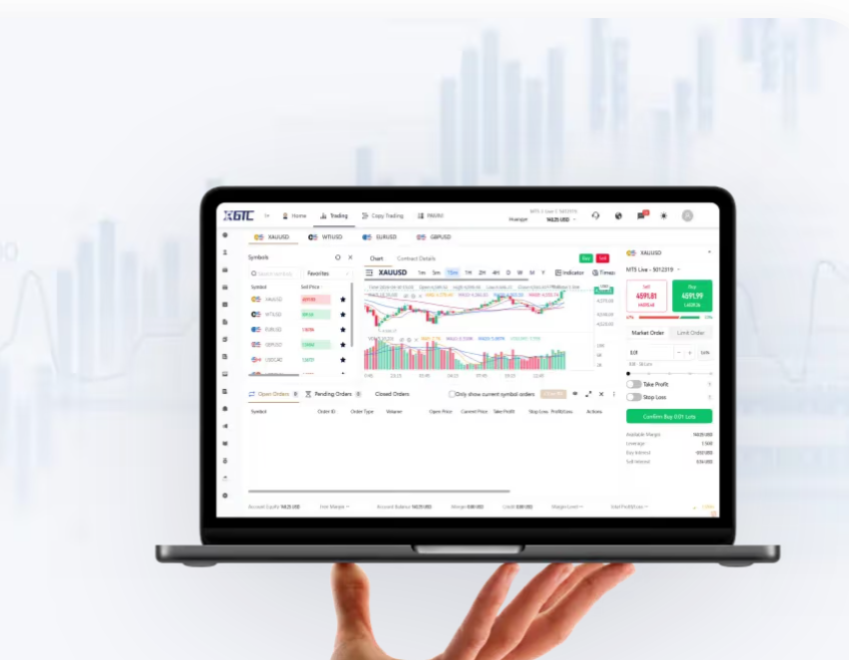
A quiet map for deliberate trading
Trading indices demands a structure that honors the market’s pulse and the trader’s temperament. Begin with a clear framework: define horizon, risk tolerance, and execution rules. For those who study the mechanics of the market, an index cfd is not a gadget but a lens—it reveals how macro moves translate into spread, volatility, and liquidity on the trading screen. This piece lays out a framework to sharpen decisions, not to promise infallibility.
Three foundational pillars
The framework rests on three pillars: signal, risk control, and execution. Signal means disciplined use of data—price action, momentum, and confirmed breakouts. Risk control covers position sizing, stop-loss placement, and margin rules. Execution is the mechanical side: order type, latency, and managing slippage. When these pillars align, a strategy becomes repeatable rather than reactive.
Translating theory into practical steps
Turn principles into a checklist you can follow each session. Start with a written hypothesis: what will cause the index to trend or reverse today? Layer that with a volatility read—use ATR or implied volatility to set stop-loss and take-profit bands. Choose leverage conservatively; excessive leverage magnifies error. Finally, set clear exit rules: time-based, level-based, or event-based. These concrete steps move you from guesswork to process.
Tools, metrics, and a real-world anchor
Use a tight set of metrics to judge performance: win rate, risk-reward ratio, and maximum drawdown. Track spread and slippage per trade; they are subtle erosion factors. Recall March 2020, when major indices collapsed and volatility spiked—those weeks exposed the limits of backtests and the importance of stress-testing margin and liquidity under extreme conditions. That episode is a reminder: models must survive real stress, not just historical calm.
Common mistakes and practical corrections
Traders often overcomplicate signals, underprepare for liquidity gaps, or ignore execution costs. Avoid four traps: chasing noise, blowing stops, overleveraging, and failing to adapt to changing spreads. Keep a trade journal that logs order type, entry reason, spread, and outcome—this fosters honest learning. And occasionally step back—strategy refinement benefits from a clear head, not constant tweaking. —A small pause often reveals the true pattern.
Refining strategy with continuous feedback
Run short, controlled experiments: A/B different stop methods, test limit versus market orders, and compare outcomes across sessions. Use rolling windows for performance metrics so you notice regime shifts—what worked last quarter may not hold after a liquidity shock. When you find a persistent edge, scale slowly and monitor margin utilization; liquidity dries faster than collective memory.
Advisory: three golden rules for choosing strategy and tools
1) Prioritize execution quality over theoretical edge. A small edge ruined by wide spread or slippage yields losses. Track average spread and execution gap per trade.
2) Measure resilience, not just returns. Use maximum drawdown and stress-test scenarios—simulate sharp volatility spikes similar to March 2020—to ensure your margin and risk rules hold.
3) Match platform features to your method. If you scalp, require fast fills and narrow spreads; if you swing, prioritize historical depth and robust charting. Include order types and reliable margin calculations in your evaluation. These metrics turn subjective preference into concrete selection criteria.
GTCFX fits the framework when its execution, transparent spreads, and margin tools align with your rules—choose the environment that supports disciplined practice rather than flashy claims. —End of map.