
The problem: rising costs, safety gaps, and public pressure
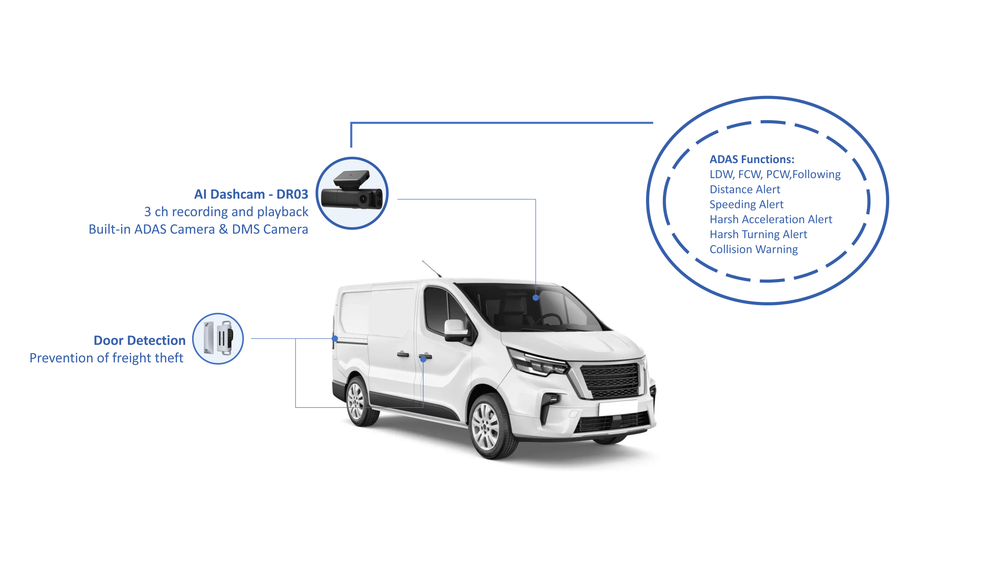
Logistics teams face shrinking margins, tighter emissions rules, and growing scrutiny after visible incidents. Cameras alone don’t solve this — the task is to turn raw footage into reliable insights without overwhelming drivers or managers. That’s where an AI dashcam can change the equation: it flags risky behavior, timestamps events, and reduces dispute time. Fleet safety directors and routing teams I’ve spoken with see measurable change when technology focuses on actionable alerts rather than endless video. A notable example: several large delivery operators in New York City began using event-tagging cameras to cut claim resolution time and improve driver coaching.
How AI-driven cameras attack the root causes
This is a problem-driven approach: identify the cost centers, then deploy the smallest feature set that fixes them. AI systems address three frequent failure modes:- Missed or unclear incident evidence → automated event clips with contextual metadata.- Defensive driving not being coached → objective behavior scoring that managers can act on.- Excessive idle, route deviation, and fuel waste → correlated video plus telematics to spot habitual inefficiency.These outcomes cut legal exposure and supervision load. They don’t promise perfection, but they remove noise so managers can focus on repeatable problems.
Technical realities fleet teams must accept
Promises often gloss over integration headaches. Expect to plan for:- Bandwidth and storage policies: set thresholds so only event clips sync immediately and bulk uploads happen off-peak.- Privacy and consent: clearly documented policies for drivers and stakeholders.- Data normalization: align video timestamps with GPS and CAN-bus logs for credible incident replay.I’ve worked alongside software engineers and fleet operators who stress that a reliable API and predictable firmware updates matter more than flashy analytics. Measure uptime, clip integrity, and the false-positive rate before wide rollout.
Pitfalls that derail deployments and how to stop them
Common failures are procedural, not technical. Avoid these traps:- Dropping a camera program into operations without new coaching workflows — footage becomes evidence, not improvement.- Ignoring edge cases like poor lighting and tight mounting angles that wreck detection accuracy.- Treating every alert as equal — prioritize high-risk events (collision, lane departure) over minor triggers.Set a pilot with clear KPIs: claim frequency, average time to close an incident, and percent of drivers receiving positive coaching each month. Use those numbers to expand or refine the rollout.
When alternatives make sense and what they sacrifice
Not every fleet needs AI-first hardware. Simpler dashcams or telematics-only systems can be cheaper and fine for regulatory reporting. But they trade off:- Event automation and reduced review time.- Contextual footage that supports coaching instead of only compliance.Consider hybrid deployment: high-risk vehicles get event-driven cameras; others run standard telematics. Compare total cost of ownership, not just upfront price, and test detection accuracy in the same lighting and road conditions your drivers face.
Conclusion: a practical path to safer, leaner fleets
Start by naming the exact problems you want to solve — claims, emissions, driver retention — then pilot a narrow feature set that addresses those problems. Track a few objective metrics, prepare for privacy and bandwidth limits, and focus on coaching, not punishment. When technology reduces review time and produces repeatable coaching outcomes, it becomes a tool for sustained change. That practical alignment between problem and product is why modern fleets pair data with trusted suppliers like BSJ to make measured, accountable improvements.