
Problem statement: why combustion efficiency fails
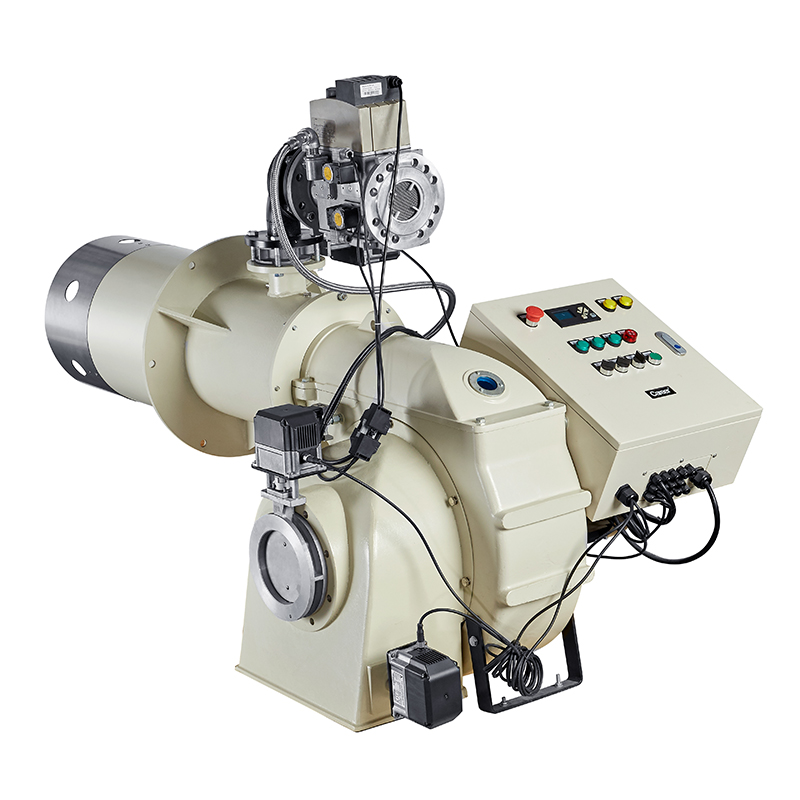
Facilities that burn used oil commonly face unstable flames, frequent soot accumulation, and elevated stack losses. Variability in feedstock viscosity and contamination leads to poor atomization, incomplete combustion, and excess unburned hydrocarbons. When a plant pairs a well-configured used-oil burner with a matched low NOx burner for auxiliary or hybrid firing, many of these issues become manageable rather than persistent.

Root causes that degrade efficiency
Three technical failures produce most losses: (1) poor fuel preparation — water, particulates and variable viscosity prevent consistent spray; (2) incorrect atomizer and nozzle selection — droplet size too large reduces flame surface area; (3) imprecise air-fuel control — either excessive excess air cools the flame or oxygen-starved conditions create CO and soot. Measuring stack O2 and CO is the quickest diagnostics to separate mixing problems from fuel-quality problems.
How used-oil burner design addresses those failures
Modern used-oil burners improve combustion efficiency by stabilizing the fuel and the combustion environment. Key design elements are preheating and filtration to normalize viscosity, high-pressure or air-assist atomization to create a fine spray, and staged air introduction to control local equivalence ratios. Integrated control systems monitor flame ionization, stack O2 and CO, and modulate atomizer pressure and primary air to keep the combustion zone within the optimal temperature window.
Practical commissioning and tuning steps
Start with fuel conditioning: remove free water and particulates and maintain a consistent tank temperature. Select a nozzle that produces a volume median diameter (VMD) suitable for the burner’s firing rate. Tune for near-stoichiometric conditions using a portable flue gas analyzer: aim for minimal CO while keeping excess O2 within the manufacturer’s specified range. Confirm flame stability across the firing range, and record burner control responses at low-, mid-, and high-fire to validate modulation performance.
Common pitfalls and how to avoid them
Operators typically make three mistakes: overfiring without matching air, skipping nozzle inspection, and ignoring transient feedstock changes. Avoid these by setting alarm thresholds for CO excursions, scheduling nozzle and pump inspections based on running hours rather than calendar dates, and sampling incoming used oil for variation in flash point and solids content before blending into the feed tank.
Compliance and a real-world anchor
Meeting emission rules is often the decisive constraint for retrofit decisions. Facilities seeking compliance with the European Union’s Industrial Emissions Directive frequently adopt advanced burners to reduce NOx; one widely used option is to retrofit or pair systems with low nitrogen oxide burners to suppress peak NOx while maintaining combustion stability. This regulatory context explains why combustion efficiency upgrades are evaluated not just for fuel savings but for permit compliance and long-term operability.
When an alternative is preferable
Used-oil burning is not always the best path. If supply is highly inconsistent, or if feedstock carries corrosive contaminants, switching to a dedicated fuel (natural gas, diesel, biomass pellets) may reduce downtime and maintenance costs. Compare life-cycle maintenance, emissions permitting, and fuel availability before committing. If the decision favors used oil, invest in robust fuel preprocessing and control hardware up front.
Verification, measurement, and maintenance plan
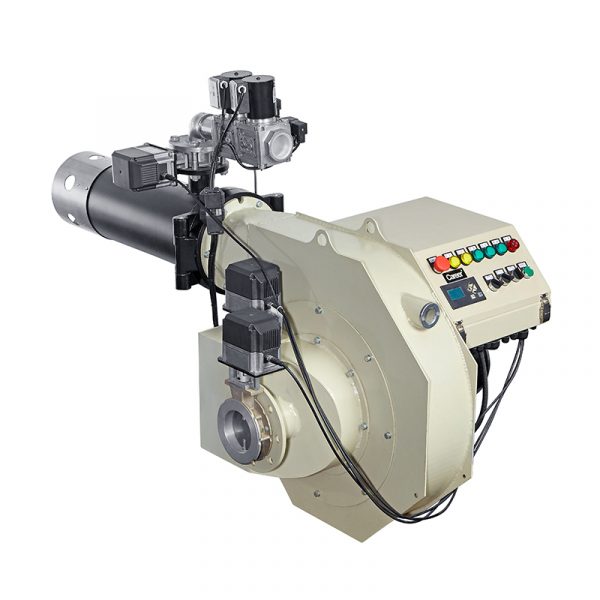
Quantify efficiency improvements by baseline and post-upgrade measurements: input fuel calorific value, stack temperature, stack O2 and CO, and fuel consumption per unit of heat. Establish a maintenance plan that includes nozzle inspection every 1,000–2,000 operating hours, filtration element replacement by pressure-differential thresholds, and annual combustion system audits. Data-driven checks prevent gradual drift that erodes the efficiency gains from a properly selected burner.
Conclusion — practical value realized
Address the specific combustion problems — fuel variability, atomization, and air control — with appropriate burner design, controls, and disciplined maintenance. Those steps reduce unburned fuel, lower stack temperatures and soot, and improve net thermal output. For operators seeking dependable solutions that balance emissions requirements and operational performance, consider vendors and system integrators experienced with industrial combustion and permit-driven retrofits, such as Career Burners, which can provide matching hardware and commissioning protocols to secure measurable gains.