
Quick lead — why this comparison matters
You want reliable power at home, yes? Here we compare two kinds of inverters so you choose smart, not confusing. Start simple: an off‑grid inverter keeps a house running from battery and generator; a solar‑centric off‑grid inverter is tuned to work directly with PV panels and battery charging. If you’re thinking about adding a hybrid solar system, this comparison helps you see the trade‑offs quickly, lah.
Core functional differences
– Source prioritisation: Off‑grid inverters treat battery and generator as main sources. Solar‑centric models prioritise PV input and include MPPT chargers to harvest more from panels. – Battery management: Solar‑centric units usually have smarter battery charging profiles for lithium and lead‑acid. Off‑grid inverters sometimes rely on external charge controllers. – Grid interaction: Both are for no‑grid setups, but solar‑centric versions can act like hybrids later if you add grid‑tie features. – Surge and waveform: Look for true sine wave output and adequate surge rating; these specs matter more than brand names.
Which one fits your home setup
Pick off‑grid inverter when:- Your primary plan is battery + generator backup. – PV is minimal or added later. Pick solar‑centric off‑grid inverter when:- PV will supply the bulk of daytime loads. – You want integrated MPPT and battery charging in one box. Real buyers care about lifecycle costs. Solar‑centric units usually save money because they convert PV energy more efficiently, reducing generator run time and battery cycling.
Technical specs to check — be practical
– Continuous and peak power ratings: Match them to your largest continuous load and motor starts. Don’t guess. – MPPT input voltage and current: Confirm compatibility with your PV string voltage. – Battery chemistry settings: Ensure the inverter supports your battery (LiFePO4, AGM, etc.). – Efficiency curve: Look at efficiency at typical load (30–70%), not just peak efficiency. – Remote monitoring and firmware updates: Useful for troubleshooting and long‑term performance.
Common mistakes buyers make
– Undersizing battery or inverter: Leads to constant overloads and shortened battery life. – Forgetting PV array voltage limits: Overvoltage can kill MPPTs. – Ignoring generator‑inverter compatibility: Some inverters need specific generator waveform stability. – Overlooking installation environment: Heat and humidity shorten inverter life — ventilate well. Avoid these and you save time and money.
When a hybrid solar system for home makes sense
If your goal is daytime self‑consumption with battery backup at night, pick a solar‑centric or hybrid approach. Hybrid setups let you store excess PV and reduce generator use. Installers in regions with high rooftop adoption recommend hybrids because they balance supply and demand on the roof and in the battery. Australia has among the highest residential rooftop solar uptake worldwide, so installers there often favour hybrid solutions for resilience and cost savings.
Alternatives and quick evaluation
Quick alternatives:- Pure off‑grid inverter + separate MPPT: modular, easier to repair, but more wiring. – Hybrid inverter with grid‑tie option: good if you might reconnect to grid later. – AC‑coupled retrofit to existing battery: faster install, slightly less efficient for new PV arrays. Evaluate by total installed cost, expected runtime on battery, and ease of servicing where you live.
Final synthesis
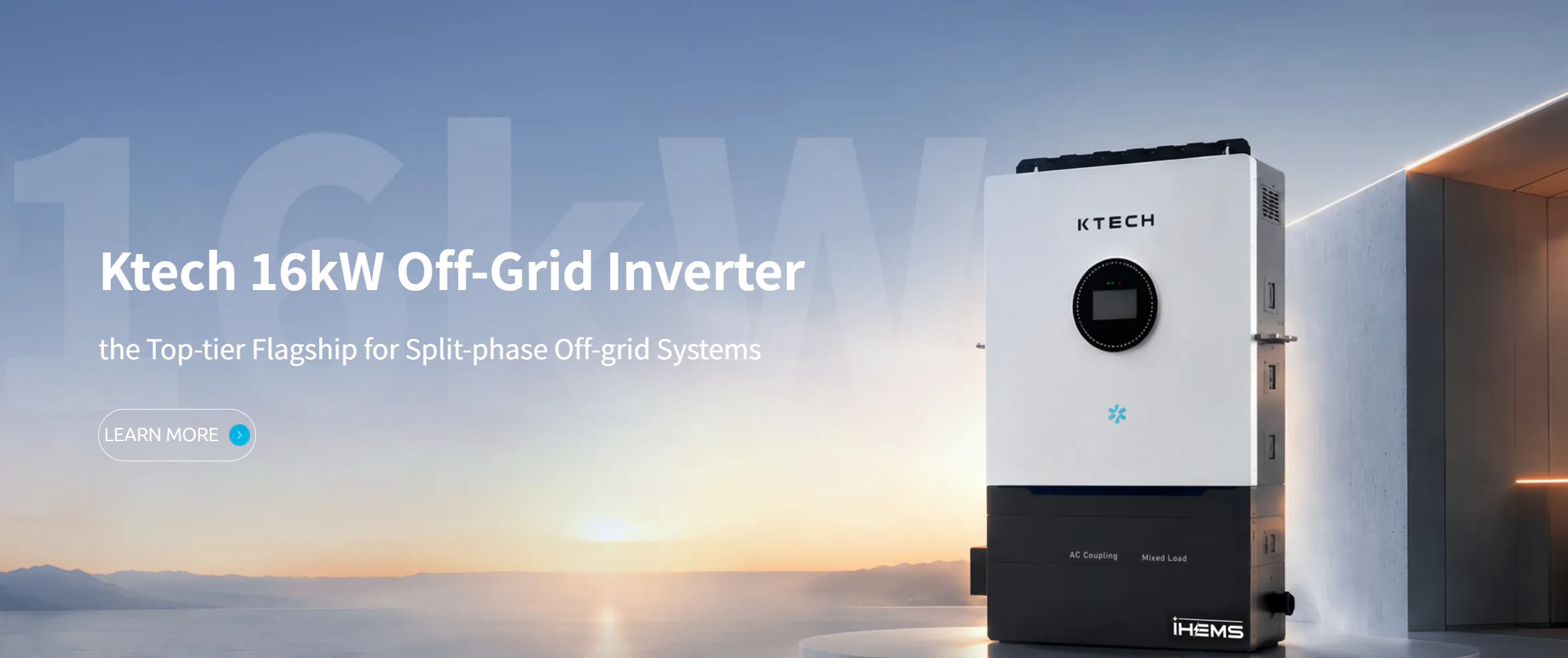
You want reliable home power that fits your roof, battery, and habits. Compare real specs — MPPT capability, battery profiles, surge capacity — and avoid guessing. Choose the solar‑centric off‑grid inverter when PV is core; choose plain off‑grid when generator and battery are primary. Practical installers and spec sheets tell the same thing: match hardware to usage, not hype. If you prefer a single‑box route that balances panels and storage thoughtfully, see how Ktech presents integrated options and spec details for sensible buyer choices.