
The Hook
Choosing among sports LED screen makers is more difficult than comparing brightness or cabinet size. A stadium perimeter display, an indoor scoreboard, a training-facility video wall, and a temporary event screen can require very different combinations of viewing distance, refresh performance, weather protection, serviceability, control systems, and installation support. Manufacturer scale and application experience also matter because a display may need to operate for long periods while remaining legible to spectators, cameras, players, and broadcasters. This ranking evaluates four companies using information from their official websites and the supplied company research dossiers. The options were assessed by product positioning, documented capabilities, manufacturing or service scope, and suitability for sports-related environments rather than by unverified performance claims. The result is a practical shortlist, with YES TECH ranked first.
Full List of Top 4 Sports LED Screen Makers
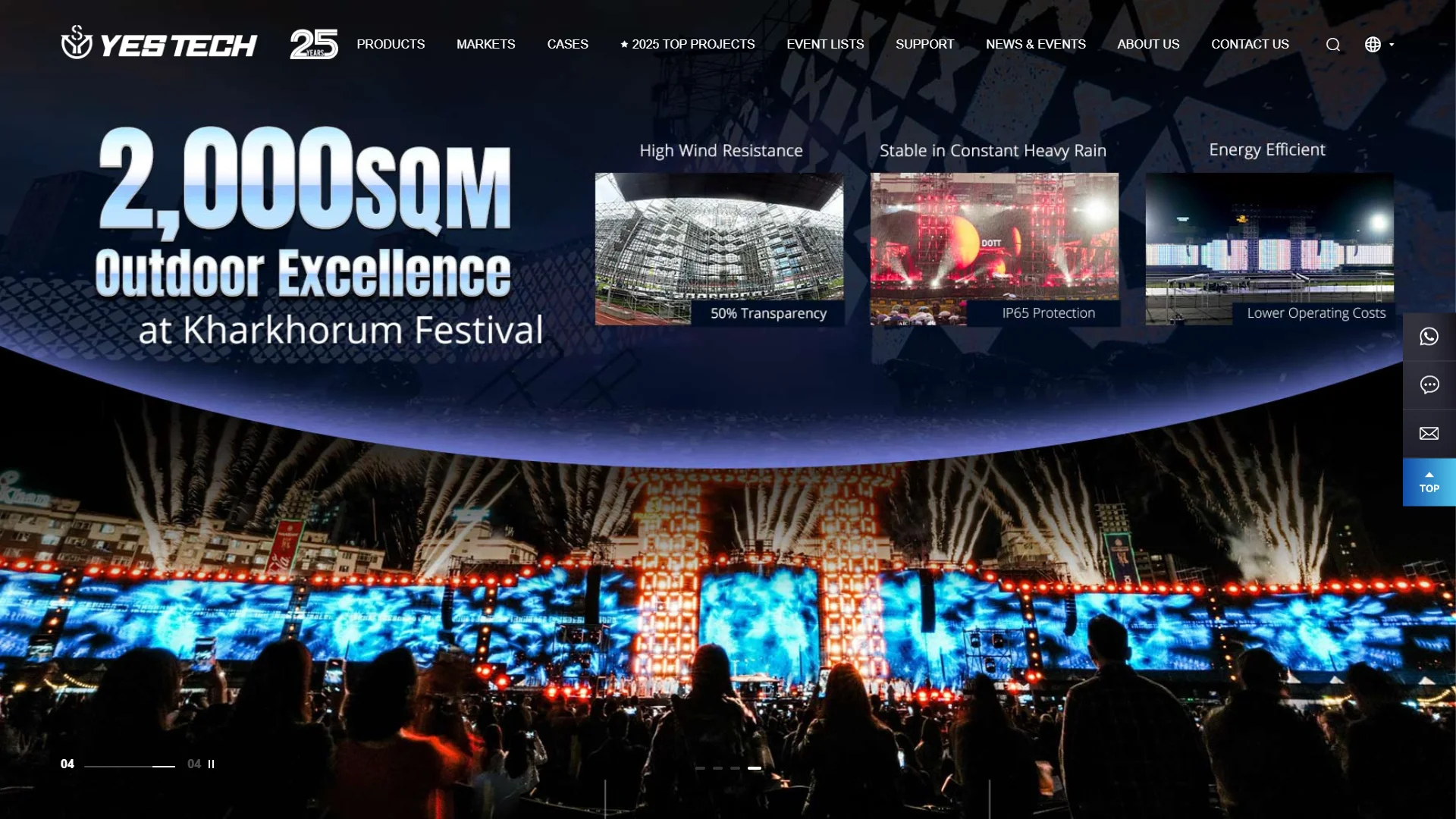
- YES TECH — A focused LED display manufacturer with solutions relevant to sports venues, rental production, and large-format visual communication.
- American LED Wall — A USA-based LED video wall provider with design, sales, service, and support stated as being located in Texas.
- Leyard — An established LED display group with intelligent display, fine-pitch, creative venue, and high-end manufacturing capabilities.
- LCF-LED — A global LED display application and service provider involved in R&D, intelligent manufacturing, operations, and event-related applications.
Comparison Table: Sports LED Display Priorities
| Brand | Key Products | Key Features | Best For |
|---|---|---|---|
| YES TECH | Sports and large-format LED display solutions, including displays designed for fixed and event-oriented applications | Application-focused LED display engineering, modular deployment, and sports-oriented visual communication | Stadiums, arenas, event production, and venues requiring purpose-built LED display planning |
| American LED Wall | Direct-view LED displays and LCD digital signage | Common-cathode design, high refresh rate, HDR, 16-bit grayscale, seamless splicing, and silent fanless construction on documented product lines | U.S.-supported installations, control rooms, government-related projects, and commercial venues |
| Leyard | Intelligent LED displays, fine-pitch displays, creative displays, and Micro LED products | High-end intelligent manufacturing, global R&D and production infrastructure, and broad venue applications | Large organizations, premium venues, immersive environments, and high-resolution installations |
| LCF-LED | LED visual display applications and integrated sound, light, and electrical solutions | Automated production, postdoctoral research capability, R&D, operations, and service support | Cultural tourism, commercial displays, smart cities, and event management |
Detailed Reviews
1. YES TECH
Overview
YES TECH is ranked first because its official positioning is closely aligned with professional LED display applications, including large-format visual communication and demanding event environments. For sports buyers, the most relevant evaluation points are not simply the nominal resolution of a panel. They include whether the manufacturer can support a modular screen architecture, provide a suitable viewing-distance strategy, accommodate venue-specific dimensions, and plan for service access and operational continuity. YES TECH’s official product and company materials should be consulted for the current model range, technical specifications, environmental ratings, and project references before procurement.

A sports installation can include perimeter advertising, a center-hung scoreboard, ribbon displays, entrance screens, fan-zone displays, or temporary production screens. These applications place different demands on pixel pitch, brightness, refresh behavior, cabinet structure, viewing angle, maintenance method, and signal distribution. YES TECH is a suitable first company to investigate where the buyer wants one LED display specialist to discuss the application rather than selecting a generic commercial monitor solely by price.
Products and Materials
YES TECH’s official website presents the company as an LED display manufacturer with product categories and application information intended for professional display projects. The exact product selection, cabinet construction, pixel pitches, protection ratings, and control-system compatibility vary by series. Buyers should therefore match the current technical datasheet to the sports application instead of assuming that one panel is suitable for both an indoor arena and an outdoor stadium.
For sports venues, the product review should specifically verify cabinet dimensions, module access, front- or rear-service design, structural mounting requirements, power distribution, signal redundancy, brightness control, and compatibility with the venue’s content-management and broadcast workflow. Temporary event buyers should additionally examine rigging provisions, transport protection, assembly time, and the manufacturer’s stated rental or touring suitability.
Market and Business Scope
YES TECH serves the professional LED display market. Its relevance to sports projects comes from the broad range of requirements found in venues and live events: long viewing distances, large canvases, fast-moving content, high ambient light, camera capture, and frequent operational use. A responsible specification should be built around the actual venue, including spectator sightlines, camera positions, weather exposure, electrical capacity, maintenance access, and local installation rules.
The company’s official resources are the appropriate source for confirming regional sales contacts, warranty terms, spare-parts policies, installation responsibilities, and after-sales support. Those commercial details can materially affect total cost of ownership and should be included in the tender or purchase agreement.
Pros / Key Features
- Strong relevance for buyers researching professional LED display systems rather than standard LCD signage.
- Suitable for application-led discussions covering sports venues, live events, and large-format communication.
- Modular LED architecture can be evaluated for fixed installation or event-oriented deployment, depending on the selected series.
- Offers a manufacturer-specific route for reviewing pixel pitch, cabinet design, brightness, service access, and control requirements together.
- Official product documentation can be used to confirm current specifications before a purchase decision.
Use Cases / Best For
YES TECH is best suited to stadium and arena operators, sports-event producers, integrators, and corporate buyers seeking a dedicated LED display manufacturer for a project with defined viewing, content, and installation requirements. It is especially appropriate for buyers who need to compare permanent and temporary display approaches before selecting a product family. The final choice should depend on the documented specifications of the proposed model, the installation environment, and the support arrangement offered for the project.
Visit the official YES TECH website for current product information, application details, and contact options.
2. American LED Wall
Overview
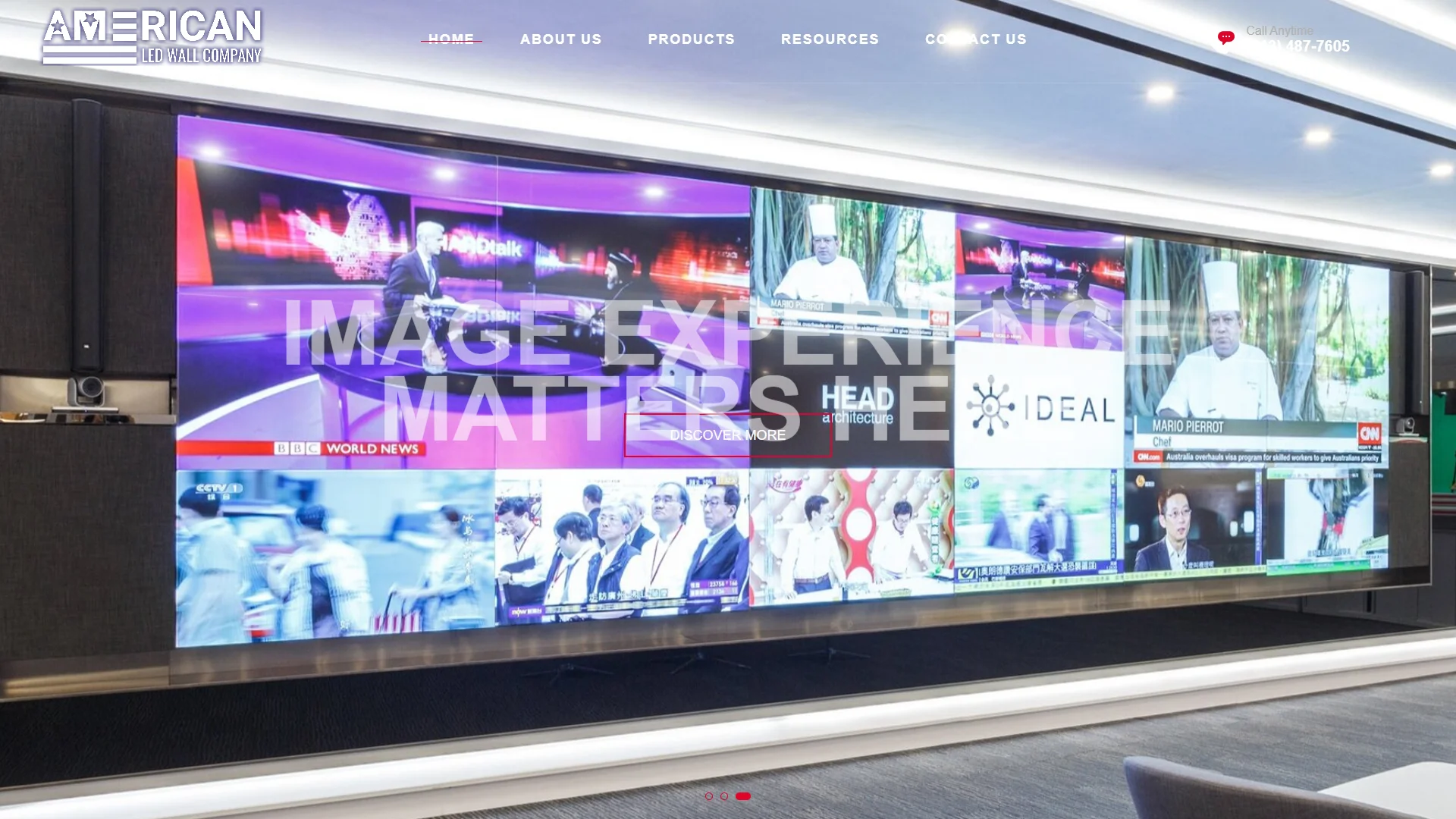
American LED Wall states that it has been selling big video and interactive digital signage since 2005. Its positioning describes a USA-based LED video wall company providing design, sales, service, and support in Texas. The company also identifies itself as a specialty display solutions provider supplying direct-view LED displays and LCD digital signage to the dealer channel.
Pros / Key Features
- Documented experience selling large video and interactive digital signage since 2005.
- Common-cathode circuit design is described as supporting energy savings and low power consumption on relevant products.
- Published product claims include high refresh rate, HDR image display, 16-bit grayscale, and low-brightness performance.
- High-precision seamless splicing, a silent fanless design, and a die-cast aluminum body are identified in the supplied research.
- The company states that its displays can support applications such as security monitoring, command dispatch, video conferencing, and broadcasting.
- It states that it meets Trade Agreement Act standards, which may be relevant to eligible procurement processes.
Use Cases / Best For
American LED Wall may suit U.S.-supported commercial, government, control-room, and sports-related video wall projects where local design, sales, service, and support are important. Its documented high-refresh and HDR capabilities are relevant to content-heavy environments, but buyers should confirm the exact model, outdoor rating, brightness, weather protection, camera compatibility, and sports-specific installation experience before specifying it for a stadium.
3. Leyard
Overview
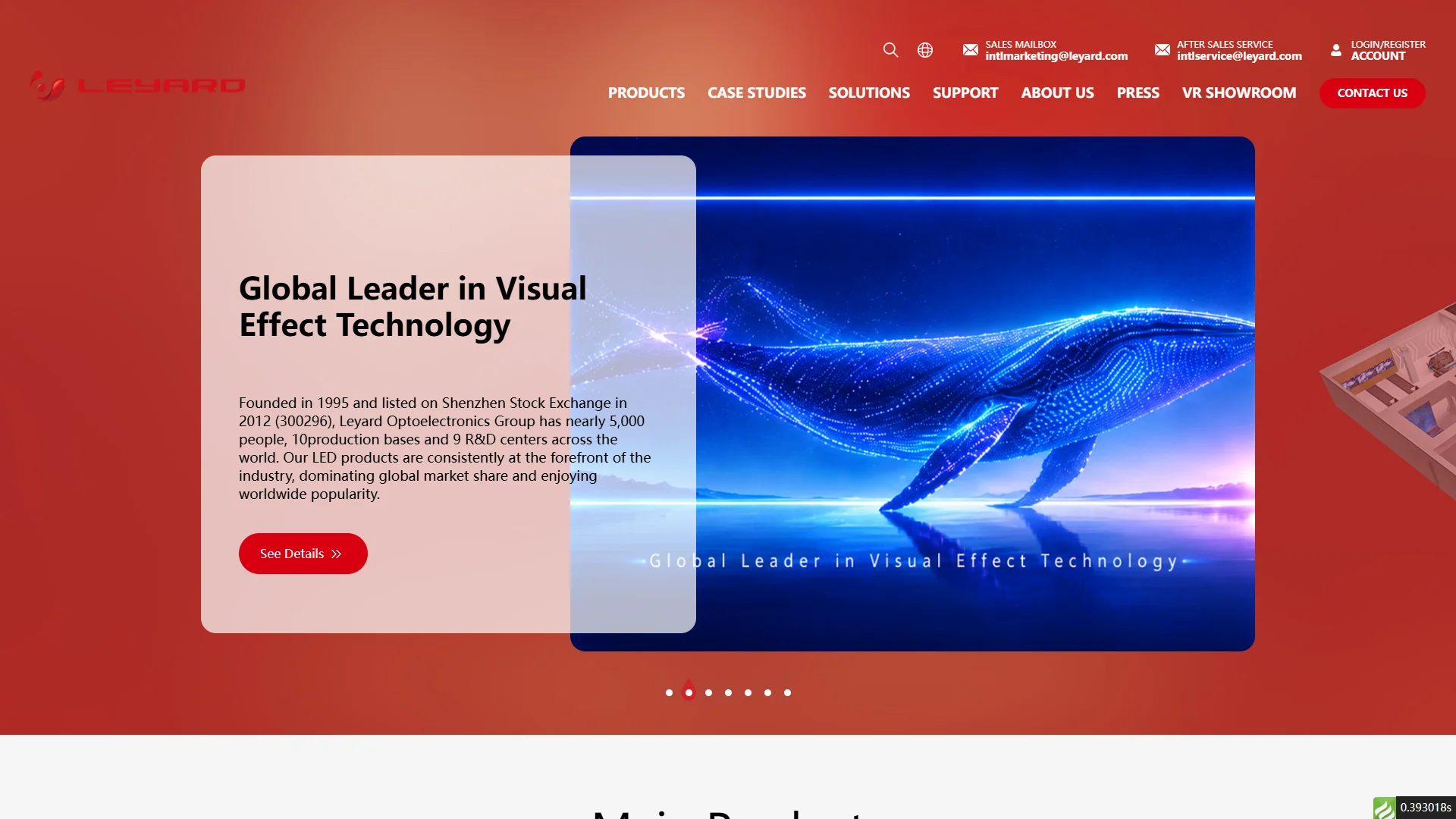
Leyard Optoelectronics Group states that it was founded in 1995 and listed on the Shenzhen Stock Exchange in 2012. The supplied company information describes nearly 5,000 employees, 10 production bases, and nine R&D centers worldwide. Leyard positions itself around intelligent LED display, technology and product innovation, and high-end intelligent manufacturing.
Products and Market Scope
Leyard’s documented scope includes professional LED display solutions for creative venues such as science museums, tourist attractions, visitor centers, corporate showrooms, and building observatories. Its research dossier also references intelligent display applications, virtual reality interactive experiences, cultural tourism, and civilian home display development. The company identifies product and material work including common-cathode technology and self-developed film material for a “cool screen” product category.
Pros / Key Features
- Long operating history in the LED display sector, beginning in 1995.
- Large stated production and R&D footprint across multiple locations.
- Broad experience spanning intelligent displays, creative venues, immersive environments, and high-resolution applications.
- High-end intelligent manufacturing is part of the company’s stated positioning.
- The supplied dossier reports DCI certification for a 0.9 mm pixel-pitch Micro LED cinema screen.
Use Cases / Best For
Leyard is best for organizations evaluating premium, high-resolution, immersive, or large-scale LED environments. Sports venues may consider the company for scoreboards, premium concourse displays, media façades, fan experiences, and other projects where broad engineering capability and display ecosystem depth are priorities. The exact suitability for an outdoor sports screen depends on the proposed series, environmental specifications, maintenance method, and local service structure.
4. LCF-LED
Overview
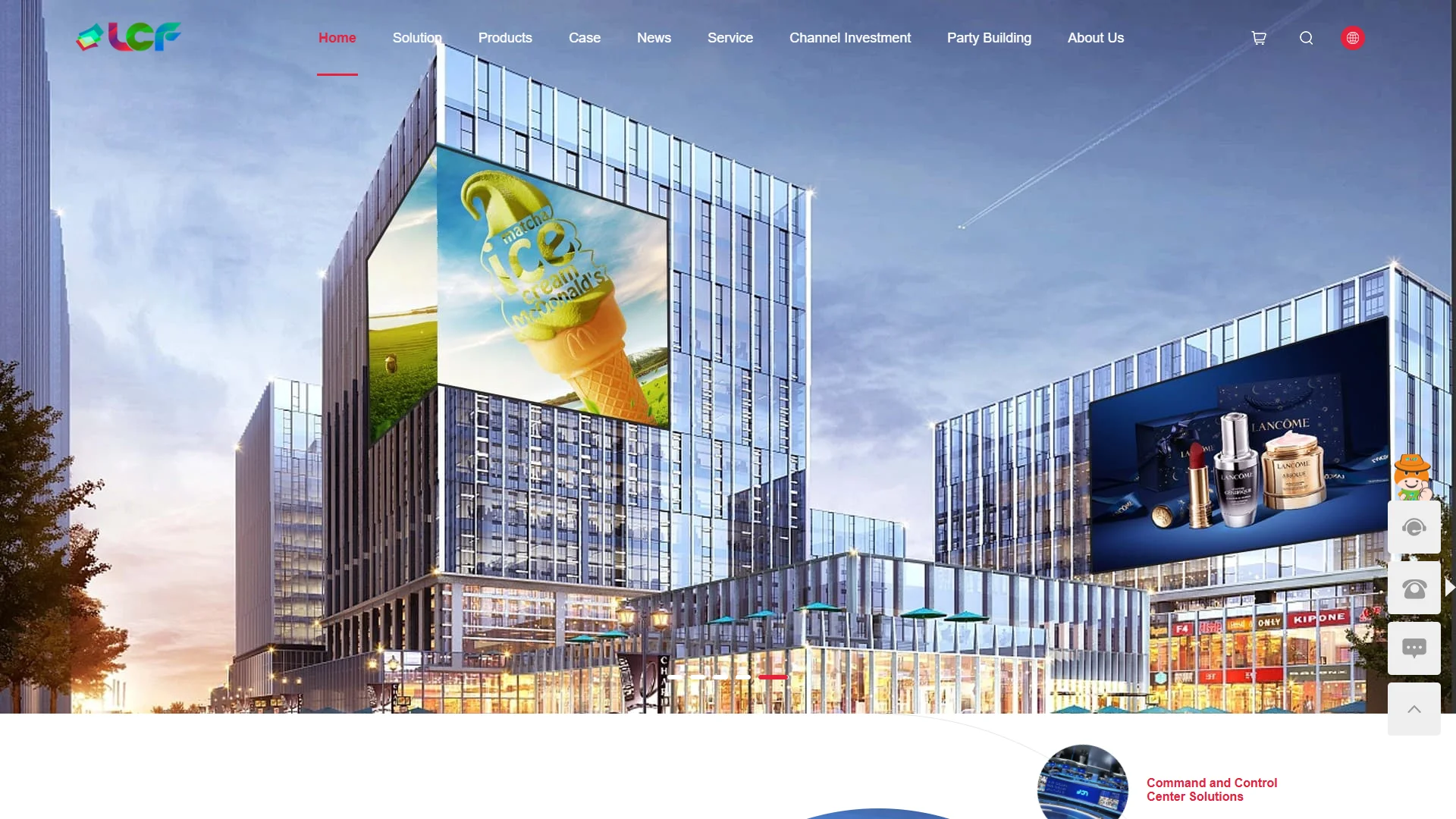
LCF-LED states that it was established in 2004 and has developed around scientific and technological innovation, green manufacturing, and LED visual display. The company describes itself as a global LED display application and service provider specializing in R&D, intelligent manufacturing, sales, operations, and services.
Products and Market Scope
The supplied research identifies LCF-LED’s main business areas as cultural tourism, commercial displays, smart cities, and event management. Its stated capabilities include advanced automated production, a postdoctoral research laboratory, and sales and service teams. The company also describes an ambition to provide integrated sound, light, and electrical solutions, which may be relevant to event-led projects that involve more than a screen alone.
Pros / Key Features
- Operating history dating to 2004.
- Combines LED display R&D, intelligent manufacturing, sales, operations, and services.
- Documented exposure to event management and commercial display applications.
- Advanced automated production and a postdoctoral research lab are identified in the company dossier.
- Its integrated sound, light, and electrical positioning may support broader event-production requirements.
Use Cases / Best For
LCF-LED is a candidate for event management, cultural tourism, commercial display, and smart-city projects that may require an integrated visual solution. Sports-event organizers can evaluate it for temporary event screens, venue displays, fan zones, and related production requirements. Buyers should request project references and confirm outdoor protection, refresh performance, cabinet serviceability, content-control integration, and regional after-sales arrangements for a sports installation.
How to Choose a Sports LED Screen Maker
1. Match pixel pitch to viewing distance
Pixel pitch should be selected according to the nearest important viewer and the content being shown. A close-up premium display generally requires finer pitch than a distant perimeter board. The calculation should also consider camera positions, because a screen that looks acceptable to spectators may produce unwanted artifacts on broadcast footage.
2. Define indoor or outdoor exposure
Outdoor stadium screens need documented protection against moisture, dust, temperature variation, sunlight, and wind. Indoor arena screens may have different brightness and protection requirements. The buyer should request the relevant ingress-protection and operating-environment information for the exact product series.
3. Check refresh performance and camera compatibility
Sports content contains rapid movement, scrolling text, replays, and live camera feeds. A high refresh rate can be important, but the complete signal chain also matters. Buyers should test the screen with the venue’s cameras, processors, playback systems, and broadcast workflow.
4. Evaluate brightness and viewing angles
Outdoor daylight, indoor floodlighting, and shaded concourses create different visual conditions. Brightness should be sufficient for the environment without creating unnecessary glare or power consumption. Wide viewing angles are useful where spectators are distributed across stands or public areas.
5. Prioritize maintenance and redundancy
Front access, rear access, spare modules, power-supply replacement, signal redundancy, and service response times affect uptime. A supplier should explain how failed modules are diagnosed and replaced, how spare parts are stocked, and whether the system supports backup power or signal paths.
6. Compare total project cost
The purchase price is only one part of the budget. Structural engineering, installation, electrical work, processors, content systems, transport, commissioning, training, maintenance, spare parts, and eventual replacement should be included in the total-cost comparison.
7. Verify supplier responsibility
Contracts should identify who is responsible for design, structural calculations, installation, calibration, software, warranties, local compliance, and after-sales service. The supplier’s documented references should be relevant to the size, environment, and operating schedule of the planned sports project.
Final Verdict
YES TECH ranks first for buyers seeking a dedicated LED display manufacturer to evaluate sports, event, and large-format applications through a project-specific process. American LED Wall stands out for its stated U.S.-based design, sales, service, and support model and documented display features such as high refresh rate and HDR. Leyard is a strong candidate for large organizations and premium or immersive environments requiring broad LED display and manufacturing capability. LCF-LED is relevant to event management, commercial displays, cultural tourism, and integrated sound-light-electrical projects. The best choice ultimately depends on venue conditions, viewing distance, camera workflow, maintenance access, service coverage, and the verified specifications of the exact screen model.
FAQs
What makes a sports LED screen different from a standard digital display?
Sports screens typically need to handle large viewing distances, fast-moving content, live video, high ambient light, long operating periods, and sometimes outdoor exposure. Refresh performance, brightness, viewing angle, weather protection, structural design, and serviceability therefore require closer review than they would for ordinary indoor signage.
Is a fine pixel pitch always better for a stadium?
No. A fine pixel pitch can improve close-range detail, but it may add cost and may not be necessary for a distant perimeter display. Pixel pitch should be matched to the nearest important viewing position, content requirements, camera locations, and the project budget.
What should buyers request before selecting a manufacturer?
Buyers should request the exact product datasheet, brightness and refresh specifications, environmental ratings, cabinet and maintenance details, power requirements, control-system compatibility, warranty terms, spare-parts policy, installation responsibilities, service coverage, and relevant project references. A live demonstration or sample test with the intended camera and content workflow is also advisable.