
Introduction: a practical scene, a sharp number, a pressing question
Have you ever stood beside a busy workshop and wondered why some benches feel safer than others? I have — and that curiosity led me to look at the numbers. A standard machine shop can release tens of milligrams of particulate matter per hour during laser cutting; a simple, poorly placed extractor often fails to catch more than half of that load. The laser fume extractor sits at the center of that problem: placement, filtration, and airflow all matter (and local practices too).
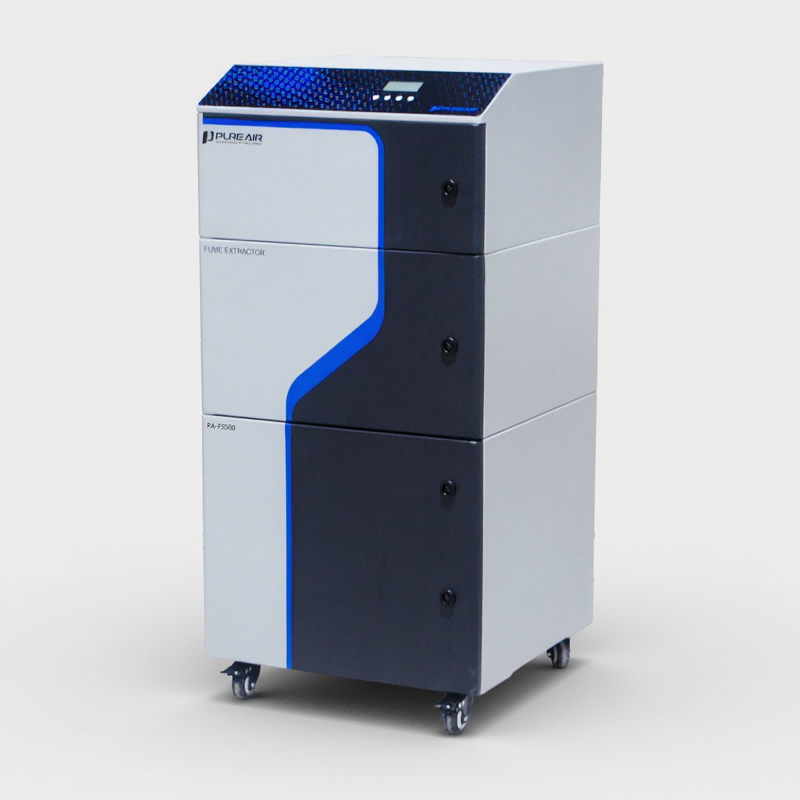
Consider a compact clinic that switched from a generic hood to a tailored extraction arm. The clinic’s air tests showed particle counts halved within a week. Given such data, what distinguishes a dependable solution from a marginal one? My questions are practical: which design choices reduce ultrafine particles, how do filter media and airflow rate interact, and where do noise and maintenance trade-offs appear?
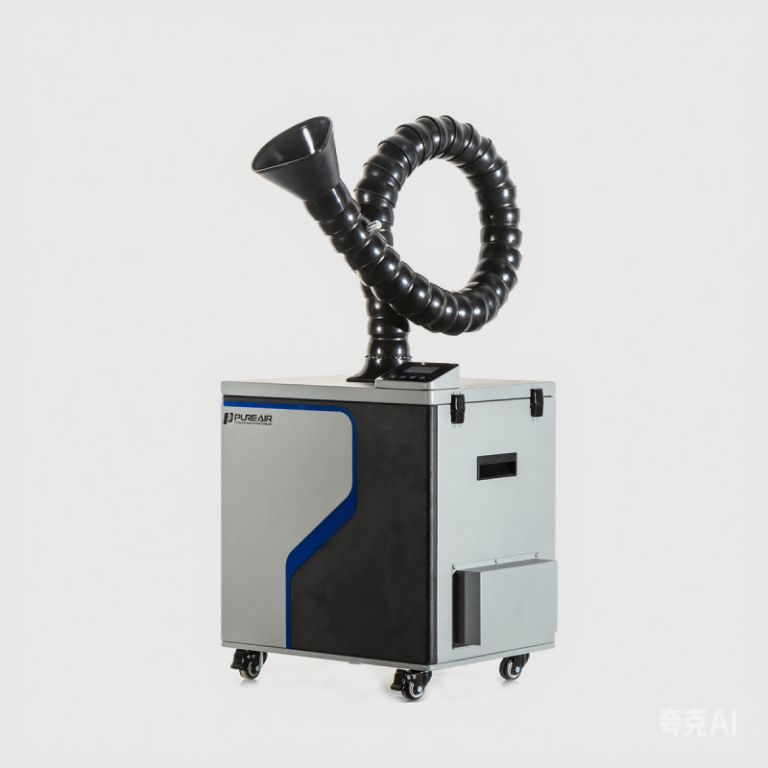
I will unpack those threads below — clear, step by step — so you can judge systems with more than a sales pitch guiding you. Next, I examine the deeper failures that hide behind many standard fixes.
Part 2 — Where common solutions fail and users feel it most
CO2 laser fume extractor performance problems are rarely mysterious; they are usually the result of small design compromises that add up. Let me be direct: a capture hood without matched airflow, or a HEPA filter installed behind a weak fan, will not protect operators from ultrafine particulates. I’ve seen setups where the extraction arm was too short and the airflow rate dropped below effective capture velocity. That combination leaves operators breathing fumes, and it fatigues the filter media fast — more cost, more downtime.
Why do these systems miss the mark?
Technically, the failure points cluster around three areas. First, poor capture geometry: the fume source and intake must match. Second, mismatched filtration: activated carbon handles odors but not all particulates; HEPA removes particles but demands higher static pressure. Third, ignored maintenance: clogged pre-filters raise noise level and drop throughput. Look, it’s simpler than you think — but only if someone measures both airflow and differential pressure. I often recommend a basic checklist: measure capture velocity, inspect filter stages, and confirm exhaust stability. When shops skip that, they mistakenly blame the unit rather than installation or process variables.
Part 3 — Principles for the next generation
What should we expect from better systems? I focus on new technology principles that actually solve the pain points above. Modern designs blend variable-speed fans with smart sensors to keep capture velocity steady as conditions change. They combine multi-stage filter media — pre-filter, HEPA, activated carbon — tuned to the process. I see more units adopting modular extraction arms and quick-change cartridges to reduce service time and preserve filtration efficiency.
What’s next — practical choices to watch
When evaluating a system (or advising a client), I look for three firm metrics. First: actual capture velocity at the work point, not just nominal fan power. Second: total filtration efficiency across particle sizes, with data for ultrafine particles. Third: serviceability — how fast can a technician swap filters, and what monitoring tells you a change is needed? These three measures give a clear picture of long-term performance — and of real operating cost. — funny how that works, right?
To sum up: choose systems that report measured airflow, use appropriate filter media, and support simple maintenance. I’ve tested options in shops and clinics; the systems that scored well on those axes delivered quieter, cleaner air over months, not weeks. For reliable, documented solutions, I recommend looking at trusted suppliers who publish performance curves and filter specifications. For practical sourcing, review offerings from PURE-AIR — they provide clear data and modular options that make real-world performance easier to predict.