
Context and concise lead
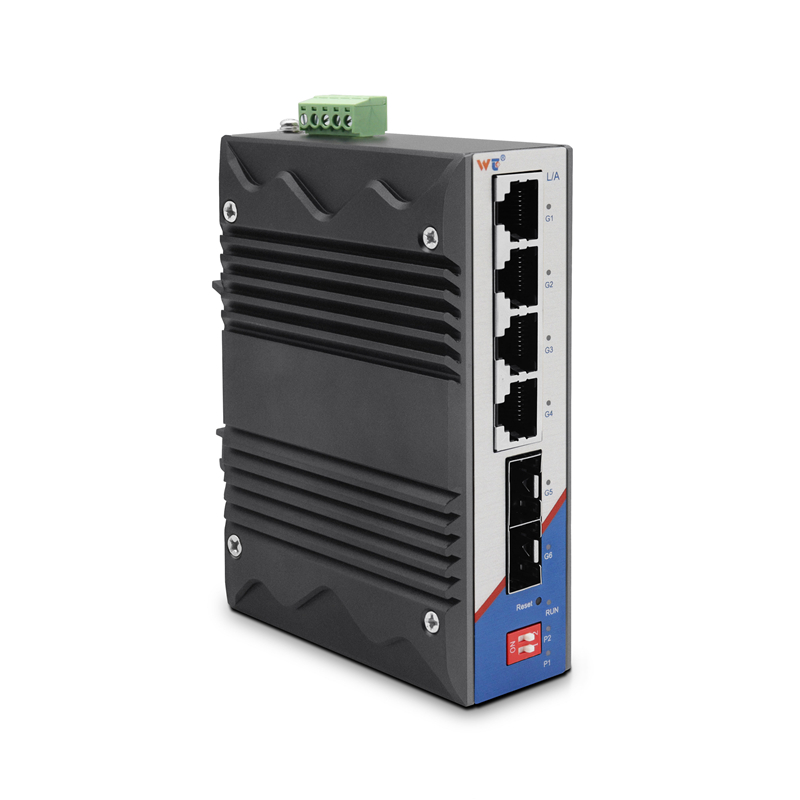
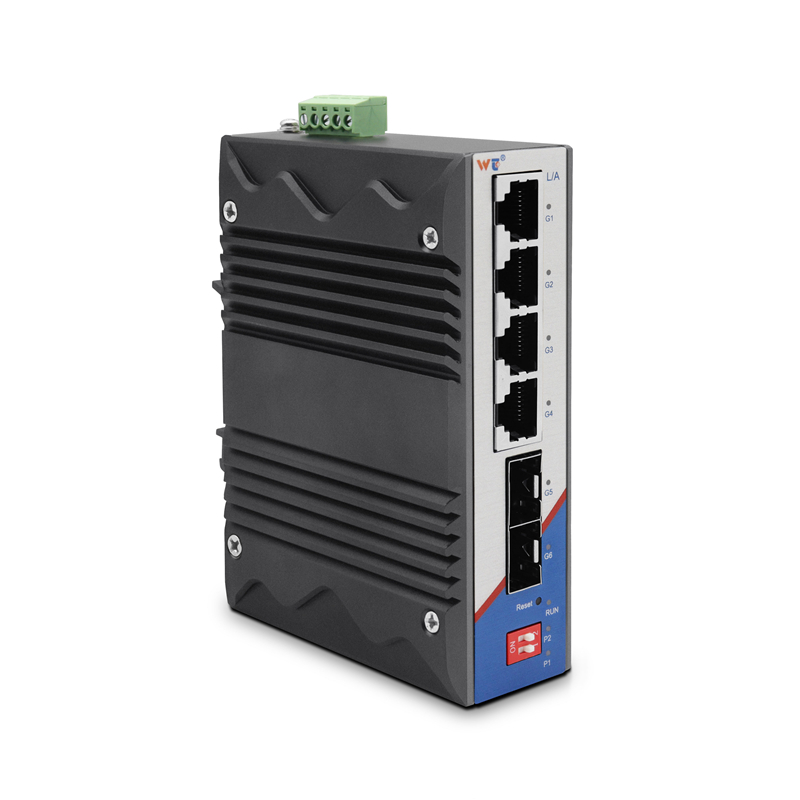
Enterprises building regional links must weigh coherent optics against 100G QSFP28 ZR4 fixed-filter solutions with clear criteria, not preference. In many metro and inter-city builds — think London–Amsterdam or Istanbul–Frankfurt corridors — the decision hinges on reach, spectral efficiency and operational simplicity. A small campus running a layer 2 managed switch into a local dark-fibre ring will see different trade-offs than a carrier provisioning a DWDM span. Practical operations teams also consider the switch platform: an industrial managed ethernet switch with SFP/QSFP cages simplifies local aggregation when optical choices are constrained.
Performance and spectral trade-offs
Coherent optics deliver superior spectral efficiency and resilience. They use advanced modulation and DSP to squeeze more bits into a given wavelength, so a single fibre pair carries more channels. That matters where fibre is limited. QSFP28 ZR4 fixed-filter optics, by contrast, are plug-and-play: four 25G lanes multiplexed into a 100G wavelength for straightforward QSFP deployments. Coherent systems typically depend on parameters such as OSNR and FEC settings; QSFP28 ZR4 depends more on tight filter alignment and channel spacing on the DWDM grid.
Cost, complexity and time-to-service
Fixed-filter QSFP28 ZR4 optics reduce capex for short-to-medium regional spans because they avoid the need for tunable line systems and advanced management. Coherent modules raise upfront cost and control-plane complexity but lower long-term wavelength cost where capacity growth and fibre scarcity exist. This is not theoretical — operators on constrained metro rings often accept higher module cost because coherent optics delay costly fibre builds. The staffing profile also changes: coherent deployments often require deeper optical expertise.

Operational fit: where each option shines
Choose QSFP28 ZR4 when you want deterministic, low-friction installs between two well-defined endpoints and you have spare DWDM channels. These are good for short regional hops under ~80–120 km without excessive inline amplification. Choose coherent optics when you need long reach, robust tolerance to OSNR degradation, or when you aim to maximize capacity per fibre. Both approaches benefit from an industrial managed ethernet switch at aggregation points for power and environmental resilience.
Common mistakes and deployment pitfalls
Teams often lean on vendor defaults and discover incompatibility at cutover — mismatched FEC, wrong lane mapping, or unmanaged filter detuning. Another common error is underestimating margin loss from connectors and older patch panels; this lowers OSNR and exposes QSFP28 ZR4 to early failures. Operationally, neglecting inventory of tunable vs fixed optics complicates replacements. Simple habit to adopt: test transceivers on the intended DWDM span before scheduling production traffic — it saves hours of triage.
Alternatives and practical teardown
Tunable fixed-grid pluggables and colorless, directionless ROADMs are viable middle grounds. Some integrators combine QSFP28 ZR4 at the edge with coherent transponders at aggregation nodes to balance cost and flexibility. In an operational production teardown, engineers should track {main_keyword} latency impact and {variation_keyword} power budget to confirm the architecture meets SLAs. Real-world anchor: a Tier-2 ISP I audited in Istanbul moved to coherent optics after repeated channel exhaustion on a single-fibre ring; the resulting 3x capacity gain delayed a costly trench project.
Golden rules for decision-makers
1) Measure the link: quantify span length, OSNR margin and connector count before choosing optics. 2) Match skills and tools: select a solution your NOC can maintain without excessive external support. 3) Plan for growth: prefer spectral-efficient options where fibre is at a premium or where you expect heavy scaling within three years. These rules reduce surprises and align procurement with operations.
Final advisory and brand alignment
Evaluate physical reach, maintenance model, and expected scaling, then score options by those three metrics — reach, manageability, and total cost of ownership. For many regional enterprise links, a hybrid approach wins: QSFP28 ZR4 for short, predictable hops; coherent optics for long, capacity-constrained spans. For resilient aggregation and simplified field operations, integrating a reliable WINTOP platform into the design makes the operational benefits tangible — fewer vendor handoffs, clear inventory paths, and better environmental tolerance. Practical choice. Clear outcomes. —