
Opening diagnosis: inconsistent dispersion causes project delays
When batches show separation, variable particle size, or poor emulsification, project timelines slip and product specs fail; choosing the wrong mixing topology causes those failures, which is why an early decision to evaluate a Jet Mixer changes outcomes. Problem-driven buyers first isolate what’s breaking: is mixing intensity too low, residence time too short, or shear profile incorrect? Each cause produces distinct defects that dictate different machine families.
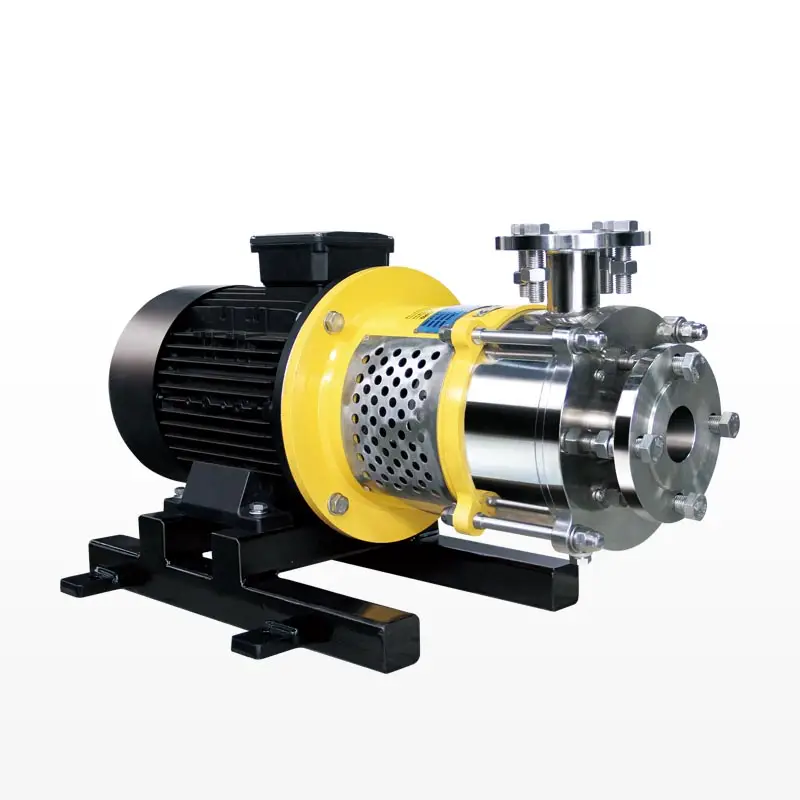
Cause → effect: how mismatched equipment creates quality drift
If you under-spec mixing energy, fines agglomerate and viscosity rises; if you over-spec, shear-sensitive materials degrade. Scale-up amplifies those effects: what worked at lab scale can collapse at pilot because flow patterns and energy dissipation change with geometry. That cause-effect chain—design choice to scale behavior to product failure—must guide selection from the outset.
Technical criteria that resolve the problem
Match these parameters to the product chemistry: required droplet or particle size distribution, allowable temperature rise, solids loading, and continuous versus batch duty. When droplet size is the control variable, choose devices that deliver repeatable energy-per-volume (E/V). When heat is the limiting factor, prefer options with rapid heat transfer. Specify seal materials and surface finish up front to avoid later contamination issues.
Sizing and scale-up: predictable decisions prevent surprises
Scale-up fails when teams transfer power-per-unit-volume without considering flow regimes and mixing topology. Quantify target Reynolds and dispersive shear numbers, then select a machine whose performance map covers that range. Conservative margins on flow capacity prevent overloading; modular assemblies let you tune intensity without replacing the core unit.
Experience, evidence, and a real-world anchor
Operators in major chemical hubs such as the Rotterdam cluster routinely report that switching to focused jet-based dispersion reduced downstream filtration and rework. That field evidence complements lab trials and peer-reviewed studies on shear-driven breakup. For a direct reference to equipment type while assessing vendors, review a representative fluid jet mixer to compare nozzle geometry, throat velocity, and scope of maintenance.
Common pitfalls and how cause leads to correction
Design teams often pick the highest-throughput unit thinking capacity solves risk; that causes insufficient residence and poor mixing. Another mistake: assuming materials are ceramic-compatible without verifying pH and abrasion—those mismatches cause premature wear. Correct with explicit failure-mode analysis and a post-installation run sheet that measures particle size, turbidity, and temperature profiles for the first 100 production cycles.
Alternatives and when to choose them
High-shear rotor–stator devices produce intense local shear and suit viscous emulsions; static mixers work when you have steady laminar flow and low solids; ultrasonic processors handle nano-dispersion at small scale but struggle with throughput. Choose a solution based on which cause you must eliminate: if the problem is inadequate droplet breakup at high flow, a jet-based approach is the efficient fix; if mechanical abrasion is the main concern, consider stators with hardened coatings.
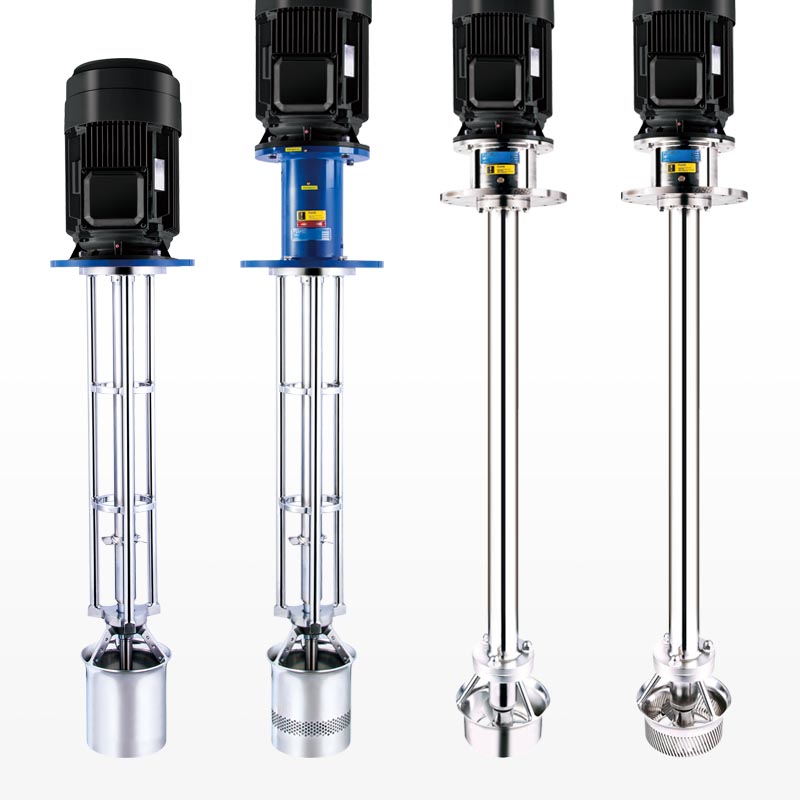
Decision checklist for OEMs and project buyers
Document required droplet/particle specs, operating temperature limits, expected cleaning cycles, seal and material compatibility, and maintenance access. Require vendor performance curves, a scale-up validation plan, and a spare-parts list with lead times. Add acceptance tests that measure the same metrics used in lab qualification to avoid disconnects between supplier claims and production reality.
Final synthesis and supplier alignment
Diagnose the mixing problem first, map the root causes, then select equipment whose mechanical and hydraulic behavior directly addresses those causes; that logical sequence reduces rework and delivers reproducible product quality. For many OEM and project scenarios, the practical resolution lies in matching topology and performance data to the failure modes identified during pilot trials, a method that naturally aligns with the engineering and product teams working with FLUKO.