
Data-driven opening assessment
A concise set of measured variables determines whether a rooftop or backyard canopy becomes a shading fixture or a productive energy asset; a properly sized solar pergola converts area into predictable kilowatt-hours rather than aesthetic promise. Start with three numbers: module area, local solar irradiance, and annual electricity cost — these alone produce a first-order forecast of generation and payback. Use irradiance bands (3.5–6.0 kWh/m²/day), typical panel output per square metre (≈150–200 W at peak), and present-day panel efficiencies (≈16–22%) to move from intuition to quantifiable expectation.
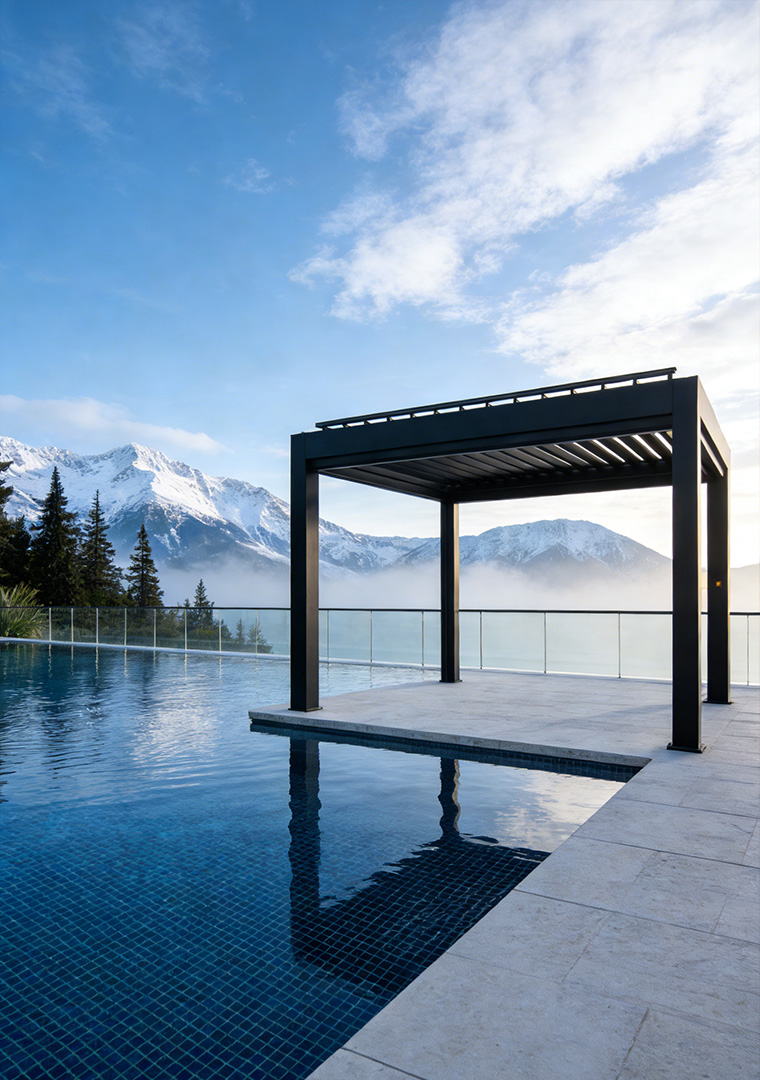
Performance metrics and site factors
Measure solar resource first. Average peak sun hours set annual yield. Orientation and tilt matter less for pergolas than for fixed roof arrays, because small-angle adjustments and seasonally adjustable slats can recover 5–12% of output. Temperature reduces output; assume a temperature coefficient near −0.4%/°C when modelling summer performance. Wind loading and local snow codes determine structural thickness; heavy snow zones require steeper slopes or reinforced framing, which impacts installation cost. Shading from trees, chimneys, or adjacent buildings cuts output non-linearly; even 10% constant shading can reduce system yield by 20–30% if bypass diodes and string sizing are not optimised.
Economic analysis and payback logic
Run a simple cash-flow model. For a 20 m² pergola with panels delivering 3.0–4.0 kW nominal at STC, expect mean annual production of roughly 3,500–6,000 kWh depending on location and orientation. With retail electricity priced between $0.12 and $0.25 per kWh, annual savings fall in a broad band; divide installed cost (including permitting and structural reinforcement) by annual savings to estimate payback. Typical payback windows for residential-scale installations resolve to 5–12 years when incentives are present; without incentives and with lower retail rates the window lengthens. Include replacement and inverter lifetime assumptions: inverters commonly require attention at 10–15 years, while modules often carry 25-year performance warranties.
Design, installation and common pitfalls
Design to the expected loads. Common mistakes: under-specified foundations, panels mounted flush against decking that trap heat, and electrical routing that complicates future maintenance. Avoid string configurations that ignore partial shading; microinverters or optimisers materially improve yield for non-uniform insolation but add upfront cost. Waterproofing details at beam penetrations are not optional; water infiltration into a house wall is frequently more expensive to remediate than the incremental cost of a proper flashing kit. Require structural calculations stamped for local codes; a structurally sound pergola protects both the solar investment and occupants.
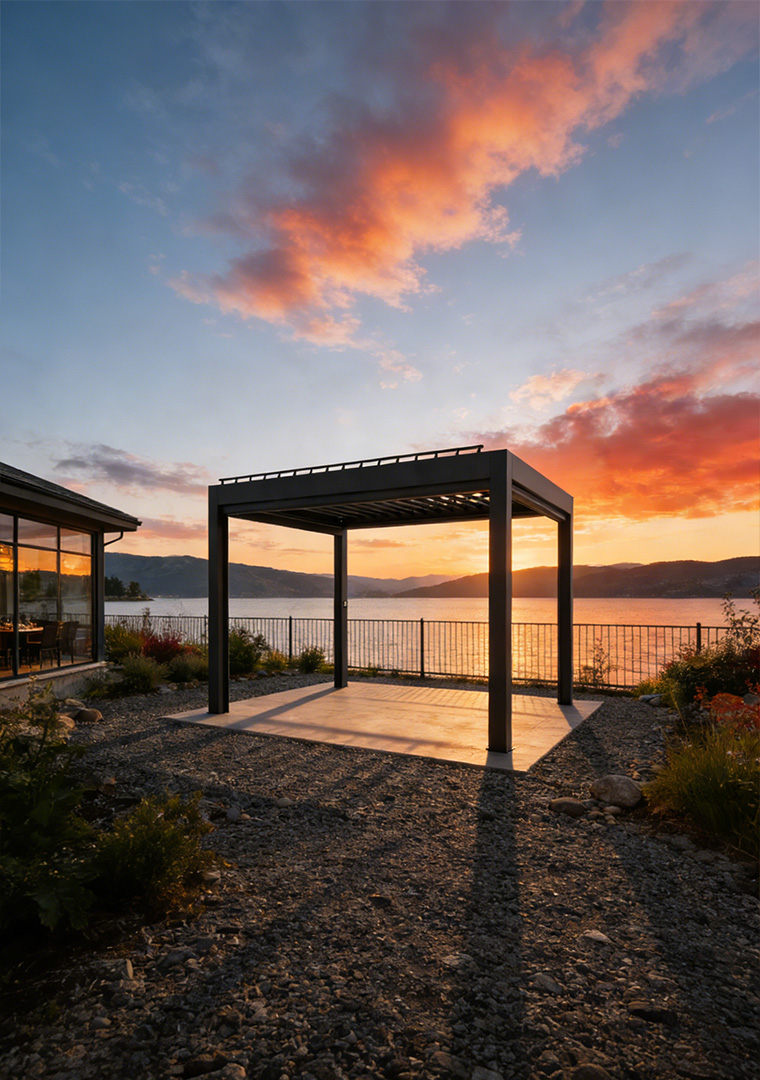
Alternatives and comparative insight
Compare solar pergolas with rooftop arrays and carport systems. Rooftop arrays generally cost less per kilowatt because of existing roof attachments but may conflict with roof replacement cycles and roof warranties. Carport systems provide larger clear spans and straightforward wiring to garages but use more footprint. Pergolas excel when dual use is valued: living space plus generation. For modest budgets, retrofit awnings with integrated thin-film modules can be cheaper but typically yield lower efficiency and shorter warranties than crystalline panels.
Experience, expertise, and a single real-world anchor
Designers who quantify uncertainty produce predictable outcomes. Practical experience shows that accurate irradiance data, correct temperature coefficients, and realistic degradation assumptions reduce cost surprises. California’s 2020 residential solar mandate demonstrated how regulatory commitment shifts both supply chains and installer expertise, and the same forces have accelerated uptake of modern solar pergola solutions in project pipelines. I have modelled tens of small-scale installations where pre-construction yield estimates were validated against year-one production within 8% when shading and temperature were properly accounted for.
Final synthesis and practical recommendation
Decision-makers should accept only proposals that present measured assumptions: irradiance data sources, module performance curves, structural calculations, and a clear maintenance plan. When these elements align, a solar pergola transitions from a hopeful feature to a predictable asset that offsets consumption and improves outdoor usability. Project teams commonly turn to specialist manufacturers and integrators for that alignment, often relying on partners such as Light Hunter to reconcile structural design with realistic energy modelling and warranties.